Catch 22
Archbishop Mannix and his involvement in the Anglo-Irish Truce Negotiations of 1920
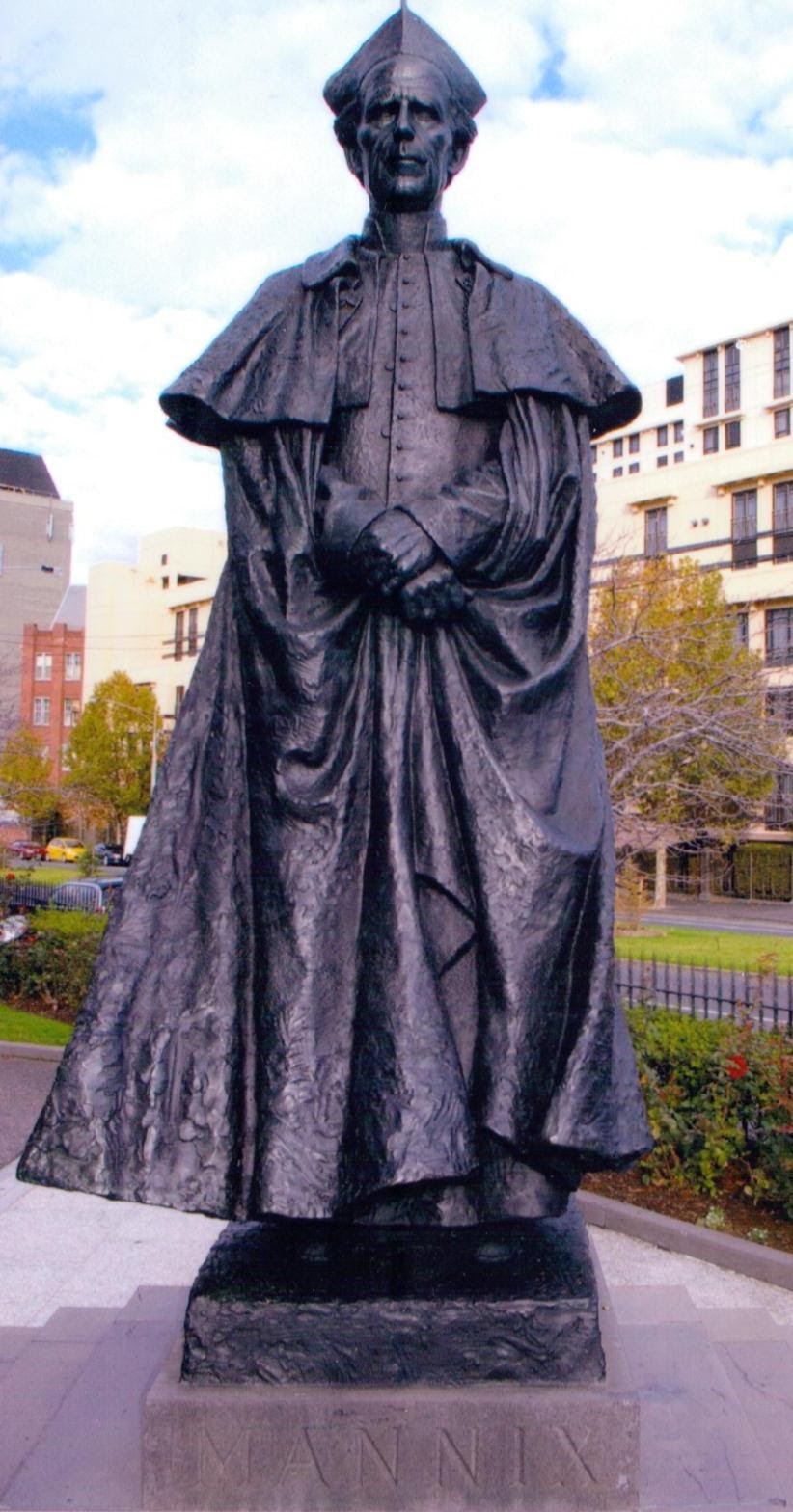
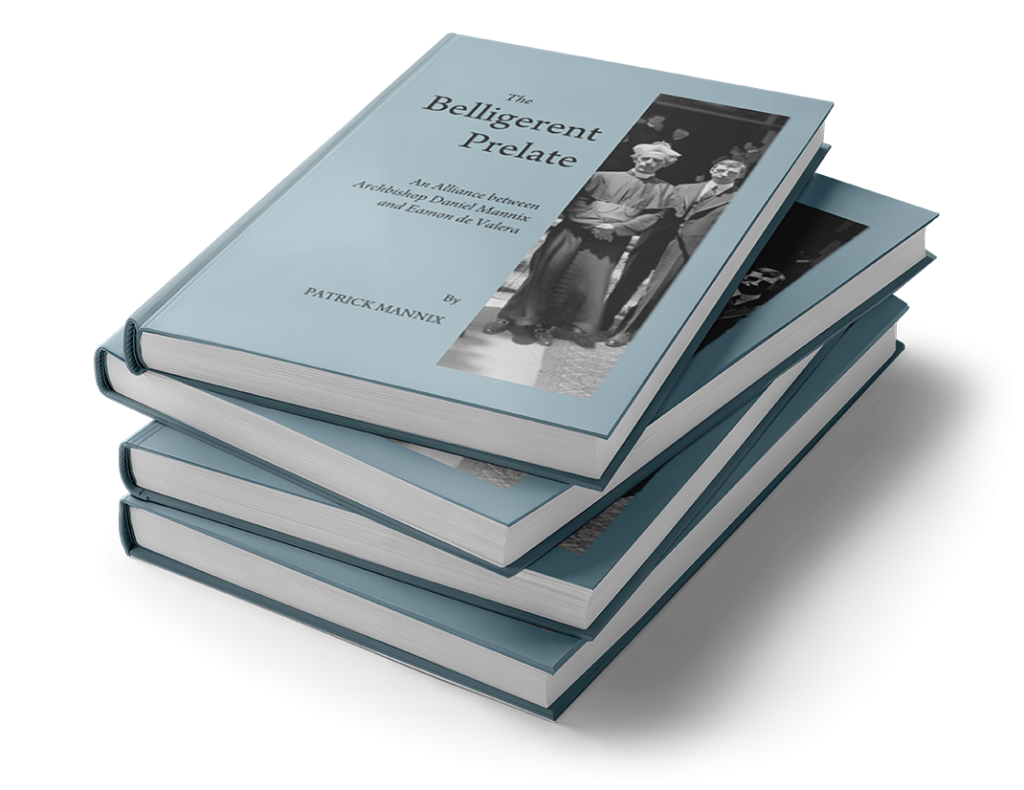
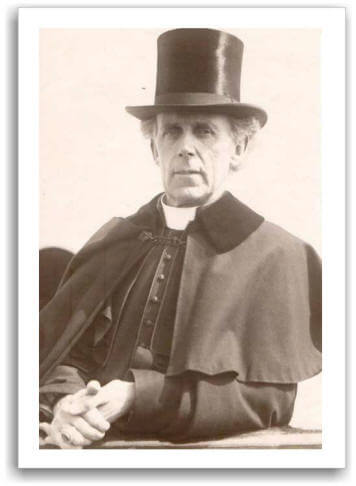
Catch 22; an idiom often used now in modern day language but where did it come from? It is derived from the famous novel of the same name published in 1961 by Joseph Heller. The definition Heller uses for Catch 22 in his book is ‘a problematic situation for which the only solution is denied by a circumstance inherent in the problem or by a rule’, or in other words a no-win situation or double bind. In many respects ‘Catch 22’ is the perfect assessment of the attempted Anglo-Irish truce negotiations of December 1920. This weekend we gather to celebrate the legacy of Archbishop Mannix. His influence has left a lasting imprint on many aspects of Irish history but these imprints have largely been forgotten about. In my book The Belligerent Prelate, I focus on his relationship with de Valera and how this impacted on both men’s careers, something that has largely been glossed over, but today I would like to focus on a different aspect of the Archbishop’s historical legacy; his role in a key conjecture in our country’s history – The Anglo-Irish Truce Negotiations of December 1920.
Let’s transport ourselves for a moment back to the timeline of Irish history. November 1920 – what is happening in Ireland? The country is in the middle of a turbulent war of attrition between the I.R.A and the British Army supplemented by the Auxiliaries and the Black & Tans. Every day the papers were regaling news reports of assassinations, violence, reprisals and bloodshed. As Anne Dolan writes ‘familiar images, incidents and individuals map out the two and a half years of ambush and execution, of reprisal and assassination, of fear, terror, curfew and martial law’.[1] The Irish people were being bombarded by both physical and psychological warfare that has left a scar right across the Irish countryside visible in the monuments along Irish roadsides. Joe Broderick notes how ‘the last stages of Terence MacSwiney’s hunger strike coincided with Kevin Barry’s incarceration, Bloody Sunday and the Kilmichael ambush all happened within a week of each other and were soon followed by the burning of part of Cork City. In August, Art O’Brien commented that ‘news of MacSwiney’s hunger strike had relegated the coverage of Archbishop Mannix’s arrest to the backpages’.[2] Enter Archbishop Daniel Mannix into the vocabulary of Irish historiography during the War of Independence.
The surname at first glance in December 1920 immediately became associated with the fiery, tall and slender Charleville native Archbishop Mannix, but elsewhere behind the scenes another Mannix was making small inroads into the historiography of the Irish War of Independence, Sergeant Jerry Mannix of the Dublin Metropolitan Police. The Bureau of Military History Collection of 1,773 witness statements is a collection undertaken between 1947 and 1957 by the state in order to gather primary source material from the revolutionary period 1913 to 1923.[3] The following witness statement is taken from Frank Thornton who was the Deputy Assistant Director for Intelligence with the I.R.A from 1919 to 1921. In his statement Thornton recalls how he ‘had a lengthy discussion with two D.M.P. officers who had already discussed matters with Michael Collins, and together they elaborated a scheme of organising the D.M.P. in such a way it could be a useful asset to the I.R.A. in compiling intelligence reports on enemy activities, particularly at night time’.[4] One of these officers that Thornton met was Sergeant Jerry Mannix, based at Donnybrook station. Thornton continues in his statement that ‘one of these men, Sergeant Mannix describes in a communication which I quote hereunder his general experience during that period, and I give it as an indication of the value that these men were to us during the whole period : – (Mannix) I secured names and addresses of British Secret Service Officers who were shot on Bloody Sunday. I secured information as to where raids were to take place when stationed in Donnybrook’. The story is now gaining momentum.
Bloody Sunday, 21 November 1920. In total 31 people were killed on this infamous day in Irish history. A very loaded term often used in Irish historiography is ‘done to death’. This term is mentioned particularly with reference to the last three deaths on that infamous Bloody Sunday, the murders of Dick McKee, Peader Clancy and Conor Clune. Both Clancy and McKee were Commandant and Vice-Commandant of the Dublin Brigade respectively and their deaths had a profound impact even on Michael Collins who himself stepped out at the funeral, with detectives present, to pin a note of farewell to their coffins.[5] Dan Breen recalls in his memoirs My Fight for Irish Freedom that, ‘earlier in the night, Conor Clune, who was a young Irish language student from Clare, was arrested at Vaughan’s Hotel, Parnell Square. He had no connection whatsoever with the I.R.A. and had merely availed himself of a lift in a car to come from Clare for the weekend. He was a football enthusiast and, as he had to attend some business in the city, he timed his arrival for the challenge match at Croke Park. He went to Vaughan’s to discuss Gaelic League business with Piaras Beaslaí. All three prisoners were taken to Dublin Castle and foully murdered. An independent medical examination showed that Peadar, Dick and Clune had been subjected to the most incredible tortures before they were done to death. They were tortured, battered, bayoneted and then shot through the head’. [6]
It is easy to see how quickly public attention is shifting and how events such as Archbishop Mannix’s arrest off the coast of Ireland in August 1920 are quickly sidelined to the back pages with atrocities such as this taking place at the heart of the action in Dublin Castle. These incidents did not go unnoticed by the diaspora as many still had strong links to Ireland. One man deeply affected by the murders at Dublin Castle was Archbishop Patrick Clune, Archbishop of Perth, Australia and none other than uncle to Conor Clune. Clune was born in Ruan, Clare in 1864, two months Archbishop Mannix’s senior. He was educated in Ruan and later at St. Flannan’s College, Ennis making his progression to the priesthood through All Hallows College in Dublin. He had been a Redemptorist Missionary in New Zealand and Australia and was appointed Bishop of Perth in 1910, becoming its first Archbishop in 1913. Clune was considered a moderate supporter of Home Rule and a backer of the monarchy while throwing his support behind conscription in Australia during the First World War and had been Catholic Chaplin General to the Australian Forces from 1916.[7] At the time of his nephew’s murder the Archbishop was staying in Ireland. This was at the same time as the Lahinch reprisal on 21 September 1920. This reprisal undertaken by crown forces was in response to the Rineen Ambush and involved the burning of many buildings in the locality. At the time of the reprisal Clune was staying with Bishop Fogarty in Ennis. Bishop Michael Fogarty was formerly a vice-president of Maynooth under Archbishop Mannix – we will return to him in a moment. Archbishop Clune would depart Ireland for England with these events at the forefront of his mind. In London, Clune reported to Mannix, who was now in England, under civic arrest, Amigo and Cotter (Bishop of Portsmouth from Cloyne).[8]
Archbishop Clune was invited to attend a lunch on 30 November in London. At this lunch Clune ‘so appalled the guests of his account of his nephew’s murder and reprisals at Lahinch that one of the guests, Joe Devlin, the Nationalist M.P., arranged for him to meet Lloyd George, which he did the next day, to give him the details. Historian James Griffin believes that ‘Lloyd George invited Clune because of his moderation and lack of support for republicanism. Clune’s candour impressed the Prime Minister in an hour and a half interview in a room at the House of Commons’.[9] Lloyd George professed himself shocked at the happenings in Ireland, denounced all reprisals and asked the Archbishop to act as a mediator if Cabinet sanction could be obtained. The next day the Prime Minister informed Clune that although he had obtained the approval of a majority of his Cabinet, over the strong objections of a minority, the difficulty arose as to how the Archbishop’s safety in Ireland could be guaranteed. But how would Clune go ahead with his task when he had no direct links or contact to the Irish leadership. On 2 December Clune was due to leave London for France en route to Australia but thanks to Archbishop Mannix a meeting was arranged with Art Ó’Briain in London (Envoy of Dáil Éireann in Britain) and Archbishop Clune now ‘expressed his complete willingness to put off his journey if his efforts would be likely to help’. Ó’Briain in a letter to Arthur Griffith, who had been recently imprisoned in Mountjoy Jail wrote, ‘I told His Grace that the stand we had always taken was that we wanted Peace in our country and that any steps that would be likely to lead to securing a honourable Peace would, I was sure, be seriously considered by the Ministry of the Republic. I further His Grace that inasmuch as he had been approached as a private individual to take up this matter, and as he had no official connection with the Republic, his action could not in anyway compromise us. On the other hand if there was any sincerity in these suggestions his action in following the matter up might lead to a successful issue to our struggle. On these grounds I advised His Grace to follow the matter up. I only warned him to be cautious of Lloyd George and to get definite assurances on 1. His ability to stop the ‘reprisals’ 2. Facilities for His Grace to meet you 3. Facilities for you to meet your Colleagues in the Ministry’.[10]
The negotiations were now in full swing thanks to Archbishop Mannix’s intervention and he continued to influence things from across the Irish Sea. He telegraphed Bishop Fogarty in Ennis: ‘Archbishop Clune crossing to Dublin tonight. Meet him Gresham Hotel on important business’. When Fogarty received the telegram as Tim Pat Coogan writes ‘he decided at first not to go to Dublin. He telegraphed Clune accordingly, prepaying the reply. Clune intended to tell him not to worry about coming up but forgot to send the prepaid wire. Getting no reply, Fogarty set off for Dublin, following Mannix’s instructions having no idea the importance of Clune’s business. While on route back to Ennis, Bishop Fogarty’s residence was raided by a party of Auxiliaries who came looking for him. Not satisfied with the response they received they proceeded to search the house to no avail. The attempt on Fogarty’s life was one of the reasons the head of the Auxiliaries General Crozier resigned his command. He later wrote: ‘At Killaloe I received further evidence the hidden hand was still at work and was told in confidence that instructions had been received to kill the Roman Catholic Bishop of Killaloe, Dr Fogarty, by drowning him in a sack from the bridge over the River Shannon so as to run on further risk of detection by having his body found’.[11]
Archbishop Clune stayed as ‘Dr Walsh’ in the home of Sir John O’Connell, a leading Dublin Catholic lawyer. Mannix’s intervention with Art Ó’Briain proved successful as it ended with Archbishop Clune meeting Joe O’Reilly (Collins right hand man) a few times before a meeting was arranged with Collins on 7 December at the home of Dr Farnan in Merrion Square. O’Reilly, instructed by Collins, issued directives to the Archbishop on how and when to meet Collins. The Archbishop was very unaware of the war situation and was at times being tailed by detectives. O’Reilly’s warning to the Archbishop about this ‘upset His Grace a bit as he realised the danger to which he was exposing Michael Collins and he discussed whether it was worth the risk to continue the mission. The arrest of Collins would make all truce negotiations redundant and strike a major blow to the Irish independence movement. A constant game of cat and mouse was at play. When Collins and Clune were meeting at Dr Farnan residence a troop of Auxiliaries pulled up outside and there was a knock at the door. Fortunately, one of the Auxiliaries had a note for the Doctor, who was a leading gynaecologist, from his wife. The meeting with Griffith in Mountjoy Jail on 3 December was much more straightforward, where Clune handed over Mannix’s letter of introduction to the jailed acting president of the Republic.[12]
This introductory letter gave Clune a good starting point but he still had an arduous task on his hands. The two main points of conflict during the negotiations were the following. Disarmament of the I.R.A and immunity for Collins and Mulcahy during the truce. During the negotiations we get a better view of the real Lloyd George. Clune told Collins how Lloyd George’s main interest seemed to lie in meeting the escapologist ‘Mick’ as he always referred to him. It was puzzling for him how Clune, a private individual, with no links to the Irish Republican leadership could meet so freely with ‘Mick’ and yet his forces could not even get a decent photograph of the infamous Corkman. Clune’s account was that ‘Lloyd George was most reasonable, gracious and anxious for peace. His Grace appealed to his vanity by saying that it would be the greatest that he had accomplished’. [13] Clune was not fully trusted and divisions were beginning to show. Art Ó’Briain in a letter to Collins outlining the main points of the Archbishop’s meeting with Lloyd George on 11 December declares that ‘the Archbishop is not equal to carrying on negotiations of this sort with a man like Lloyd George. He seems to be still impressed with Lloyd George’s desire for Peace, and more particularly his power to obtain it. By the bye, I should be careful telling him where you are staying etc. He is inclined to be rather indiscreet and too confiding. He has been talking to too many people here, and some who he should not have spoken to at all’. [14] By the time Collins received this memo Clune was already on his way back to Dublin with a message that the Dáil would be permitted to meet openly to discuss peace terms but neither Collins nor Mulcahy could attend and arms would have to be given up. Lloyd George even indicated that both Collins and Mulcahy would have to leave the country before any signs of progression in the negotiations. Griffiths was understandably not going to accept this scenario as this would amount to himself, de Valera, Collins and Mulcahy now out of the frame and allow greater chance for British authorities to tighten their grip on the republican forces. He declared to Clune that this effectively amounted to a surrender and ‘that there would be no surrender no matter what frightfulness was used’. Just as Lloyd George had intimated that he could have done more for truce negotiations if Bloody Sunday had not occurred on the 11 December the Burning of Cork City took place by Crown forces. This action would have meant a manning of the barricades for the Irish leaders and it is obvious to see as Tim Pat Coogan writes ‘both Griffith and Collins were concerned the British were using the talks as a smoke screen behind which they stepped up their campaign’. [15] It must have been extremely disappointing for Archbishop Clune as every time he figured that the British Government had settled on a position for truce they would change their strategy. Still the Archbishop persisted and ‘after Clune had further talks with Lloyd George and the Castle administration he obtained from Griffith a draft peace formula which the Archbishop and he went over at a lengthy meeting on 18 December before Clune returned to London to see Lloyd George for the last time. Historian Margery Forester believes that, ‘the Archbishop was confident that the I.R.A would obey any Dáil decision over negotiations. But Lloyd George could not count on such support from his own militarists, who remained adamant for war’.[16]
In their last meeting in Downing Street on 21 December, the British Prime Minister upheld his view on the surrender of arms and backed his military advisors when he told Clune that he was confident crown forces would destroy the I.R.A who were effectively ‘some hundreds of men on the hills’ and saw no reason for giving Sinn Féin a new lease of life by declaring a truce during which they would be allowed to hold onto their weapons. [17]
The negotiations had failed and the hopes of the Irish people for a peaceful Christmas would prove fruitless. Sturgis wrote ‘I can’t help being uneasy that we are not taking a big enough view of the position – not only the future of the Irish is at stake but the future relations of two countries which must ever live side by side and there is so much talk as if we had nothing to do but to beat an enemy’. Hopkinson contends that ‘while Lloyd George and Collins were to distance themselves from association with the mission failure, they had both invested considerable hope in Clune’s activities. Art O’Briain commented how ‘the three interviews, none of which were sought by us, all seem to me to exhibit a greater anxiety for peace than previously exhibited’. [18] Both sides, as Margery Forester maintains, ‘were suspicious of any open negotiations, partly because Lloyd George doubted that any secret emissary from Griffith had the support of Collins and the I.R.A’.[19] The result of the truce failure was Lloyd George to return to the political domain where he was strongest and try to legislate for an end to this question. This culminated on 23 December 1920 with the passing of the Government of Ireland Act. Archbishop Clune would continue to Rome for his ad limina visit to the Pope and would have unexpected success in the Vatican. Upon his arrival he discovered a Papal Condemnation was to be shortly released condemning violent acts being taken against policemen. He urged the Vatican to retract this condemnation and was successful in his attempts. His intervention effectively paved the way for Archbishop Mannix’s visit shortly afterwards and was a big boost to Irish relations with the Holy See. Clune’s role at the end of 1920 shows just how influential the Diaspora were in Irish national affairs and even though, physically, some were far removed from the activities taking place in Ireland; they maintained a strong mental communion with their homeland.
Re-enter Archbishop Daniel Mannix. Could the Charleville native have been the one more suited to such a mission? There is no doubt that Mannix’s hand had a part to play in these failed negotiations but if he had been allowed to enter Ireland in 1920 a peace settlement might have been more likely. He was much more confident, domineering and skilful at diplomacy then Clune but it effectively was a Catch 22 situation. The Irish leadership who had close links with the Archbishop would have been much more receptive to the idea of him taking charge of these negotiations but the British Government, particularly Lloyd George, distrusted Archbishop Mannix and felt he was too republican to have the best interests of the British Cabinet at heart. Indeed Mannix gave his own assessment of the negotiations – ‘Archbishop Clune was an honourable Irishman, and his heart around when he saw things that were being done in Ireland. He was anxious to bring about a truce which eventually might lead to an honourable peace. Archbishop Clune, too, was generous enough – I don’t say simple enough – to believe that good might come from negotiations with Lloyd George. I did not share his optimism. I used to walk in Hyde Park. I had plenty of leisure for taking exercise. I used to see people there, kindly old ladies, playing with the squirrels, and I thought in my own mind, and I said to Archbishop Clune, that he might be just as profitably employed playing with the squirrels in the park as he would be playing with the squirrels in the Government’.[20]
_____________________________________________________
References
[1] Anne Dolan, Irish Independent, ‘Birth of a nation part 2 –The War of Independence’, 28 April 2010, p. 3.
[2] Joe Broderick, ‘De Valera and Archbishop Daniel Mannix’ in History Ireland, 2 (3) 1994
[3] http://www.militaryarchives.ie/collections/online-collections/bureau-of-military-history-1913-1921 date accessed 26/08/2013
[4] Witness Statement of Frank Thornton, WS 615, Bureau of Military History, 1913-1921, Military Archives Dublin, p. 16.
[5] Eoin Neeson, The Life and Times of Michael Collins, p. 45.
[6] Dan Breen, My Fight for Irish Freedom, pp 157-158.
[7] Michael Hopkinson, The War of Independence (Dublin, 2002), p. 182.
[8] James Griffin, Daniel Mannix: Beyond the Myths (Victoria, 2012), p. 34.
[9] Ibid, p. 34.
[10] Art O’Brien (London) to Arthur Griffith (Dublin), 2 December 1920, Documents on Irish Foreign Policy, 1 (123) UCDA P150/1900.
[11] Tim Pat Coogan, Michael Collins: A Biography (London, 2002), pp 194-204.
[12] Ibid.
[13] Art Ó’Briain (London) to Michael Collins (Dublin) 12 December 1920, Documents on Irish Foreign Policy, 124 P150/1900.
[14] Ibid.
[15] Tim Pat Coogan, Michael Collins: A Biography (London, 2002), pp 194-204
[16] Margery Forester, The Lost Leader, pp 176-178.
[17] Tim Pat Coogan, Michael Collins: A Biography (London, 2002), pp 194-204.
[18] Michael Hopkinson, The War of Independence (Dublin, 2002), p. 182
[19] Margery Forester, The Lost Leader, pp 176-178.
[20] Rev. Walter Ebsworth, Archbishop Mannix (Victoria, 1977), pp 250-251.