From Strongbow to the I.R.A.
The siege of Kilkenny Castle, May 1922
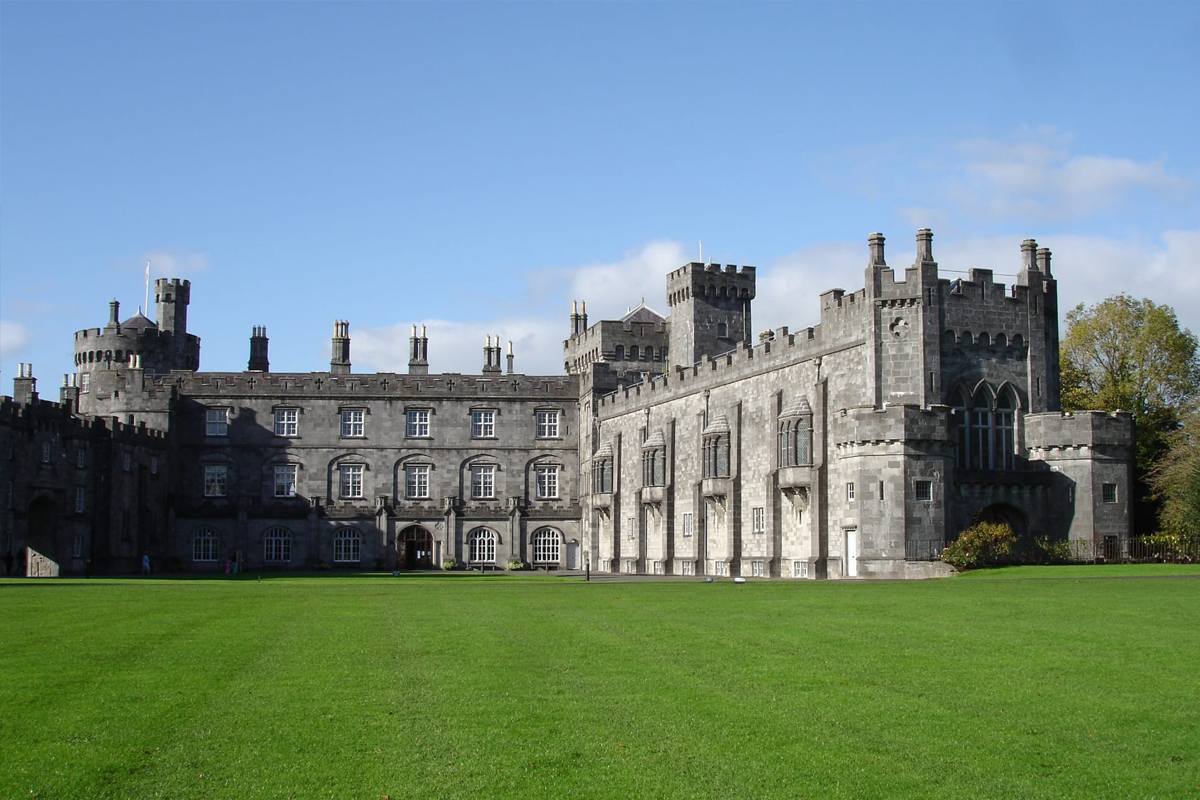
The headline from the Irish Times dated May 6, 1922 reads ‘A Historic Castle – On the Banks of the Nore – From Strongbow to the I.R.A’. [1] The article briefly details the history of the castle up to that point in history and gives a room by room account of the author’s observations on the castle’s interior. At no point does one assume from reading the article that the castle has just gone through one of the most turbulent periods in its history. The only intimation is when the author towards the end of the article dictates that ‘it would greatly be deplored should any damage result from present happenings to the historic Castle of Kilkenny’. [2] The damage referred to was primarily as a result of bullet holes which have still to this day left their lasting imprint on the rich history of Kilkenny Castle.
This article will discuss the events of the siege of Kilkenny Castle in May 1922. By analysing contemporary newspaper accounts, official documentation and archival sources from the period. It will demonstrate how this turbulent week impacted on the already diverse narrative of Kilkenny Castle. However, before one can fully understand the events of May 1922 at the castle, it is important to track the military movements that are taking place in Kilkenny in the run up to this military standoff.
Military vacuum
The 28 June, 1922 is regarded in Irish historiography as the start of the Irish Civil War. The withdrawal of British Army troops from military posts right across Ireland in 1922 created a military vacuum. This vacuum led to confrontation between pro-Treaty and anti-Treaty forces as to who would occupy former British barracks. This was no more apparent than Kilkenny city. What is generally unknown within the historiography of the Irish Civil War is that this increased tension occurred prior to the actual fighting in Dublin, regarded as the beginning of the conflict. Kilkenny City saw a significant stand-off between both the Free State Army and anti-treaty Republicans. When the British Army had evacuated Kilkenny Barracks, in February 1922, Free State forces, led by George O’Dwyer, promptly occupied the former garrison in order to fill the vacuum caused by the British withdrawal. [3] In contravention to the authority of the emerging Free State, anti-treaty Republicans occupied the John Street and Parliament Street police barracks in what increasingly became a tense affair in the city. [4]
The basis for the conflict began on Tuesday, April 25, when Kilkenny prison was taken over by anti-Treaty, I.R.A, Officer Commanding, Michael Ruth and his troops. Three days later on Friday, April 28, the same force took command of a bonded store nearby in the city, on Chapel Lane, and took possession of some 40 casks of whiskey in the stores and removed it to the prison. This action forced the hand of the national army and the following morning Saturday, April 29, Colonel Commandant, John T. Prout, O.C., Dáil Garrison at Military Barracks, Kilkenny delivered an ultimatum to the prison. Prout informed Ruth that the whiskey was to be returned and the prison to be evacuated by the anti-Treaty forces by 6 p.m. The Kilkenny People reported that ‘at about 5 p.m. the Mayor of the city (Alderman De Loughry) informed Colonel Prout that the irregular forces, were prepared to restore the goods seized but that they would not vacate the prison. Colonel Prout declined to accept these terms, and stated that there must be a complete evacuation’. [5] The situation was escalating in the city. With the deadline of 6 p.m. fast approaching; ‘at 5.45 p.m. Prout was informed that the irregular forces had left the building. Prout went personally to investigate the truth of the statement, and found two of the irregular forces awaiting him to hand over the stores seized. He then ascertained that none of the goods belonged to Belfast as had been stated; the whiskey taken from the store was Power’s of Dublin’. [6] The newspaper report continues that ‘it appears from a statement by Commandant Prout, that the irregular forces hold the John street and Parliament street police barracks in Kilkenny. He had informed them that he would not eject them from these places on condition that they did only police work, and that they wore distinctive badges, so that his men would know them’. [7] However, if the Free State Army under Prout presumed that the situation had been neutralised in Kilkenny in a peaceful manner the following week would go a long way to showing what was in store across Ireland over the prevailing twelve months. On Monday, May 1, several positions in the city were occupied by executive forces. These included the Workhouse, the Imperial Hotel, the tower of St Canice’s Cathedral; the Workingmen’s Club; Mr A. J. Wilsdon’s premises and Kilkenny Castle. In contrast the Free State Army, under Colonel Commandant Prout, was stationed in the military barracks, the jail, and the Bank of Ireland.
Representative of the vacuum caused by the earlier British evacuation Kilkenny City was a hive of military activity and both the Free State Army and anti-treaty Republicans tried to gain an upper hand within the city. As both sought to achieve military advantage over the other, in anticipation of a potential civil war, both were desirous of capturing the strategically important Kilkenny Castle. Although smaller in terms of men and weaponry, anti-treaty Republicans were quick to seize the opportunity of taking the spiritual home of the powerful Anglo-Irish Butler family.
The Siege
Recording the on-going tension in the city in his diary, George Butler, the then Earl of Ossory, detailed a remarkable contribution to the historiography of the Irish civil war. Recollecting the Republican seizure of Kilkenny Castle, he described how:
on the morning of May 2, 1922, that at the unreasonable hour of 5.30, I was awakened by a knock at the door. My butler appeared and greeted me with – Excuse me disturbing your Lordship, but the Republicans have taken the Castle. Repressing my first instinct, which was to point out that that was no excuse for calling me earlier than usual, and being by now thoroughly awake, I put on a few clothes and went down to investigate. In the courtyard I found a heterogeneous body of men, about twenty-two in number, dressed in plain clothes, standing by a pile of machine-guns, Lewis-guns, rifles, boxes of ammunition, and a couple of bombs. On seeing me, one of them, distinguished by an armlet, came and asked if I was the ‘Boss,’ and informed me that he was the ‘Commandant,’ and had orders from his superior officer to ‘defend’ the Castle. All this was delivered in a strong brogue. I told him I was the ‘Boss,’ and inquired from what part of Co. Cork he came. As I expected, he denied the soft impeachment. Then we got to business. He left me and went off on a tour of inspection with his Second in Command, in order, I suppose, to select suitable positions for his guns; while I retired upstairs to give the news to Lady Ossory and discuss future plans. [8]
While the Republicans were consolidating their position in Kilkenny Castle, the Free State Army, led by John Prout, were eager to remove them from the strategically important Castle. Prout, who was a veteran solider, had been decorated on several occasions and was recipient of the militarily coveted Croix de Guerre. A tall military man, he was described as having a military bearing and possessing good looks and being very popular with his men. [9] Prout’s adversary in Kilkenny was Richard Brennan, an officer of the anti-treaty Republicans who held the rank of commandant within the IRA. Brennan was a former soldier in the Irish Guards, a British Army Regiment and before the Truce; he had led an ambush attack against Crown forces at Simmons Cross which was in his Battalion area. [10] Interestingly both knew each other and evidence exists of a deep mutual respect between the two soldiers despite their opposing views.
A few hours after occupying the castle Commandant Prout began his assault on the anti-treaty Republican positions around the city. At 10.20 a.m. on Tuesday morning, May 2, 1922, a number of troops from the barracks surrounded the house of Mr. John Lucey, agricultural instructor, Green’s Bridge, which had been commandeered by executive forces at 1am that morning. The choice of this house by Free State soldiers was not surprising as it was within one hundred yards of the barracks and on the west corner. The Kilkenny People reports that ‘without much ado the attack was opened, and though it did not last very long the damage to the house shows how intense firing was. The position was made so extremely hot for the occupants that they surrendered in quick time. They were then made prisoners and taken to the military barracks. The regulars then proceeded to dislodge the occupants of Mr. O’Rourke’s premises at the other side of Green’s Bridge. A machine gun was placed in position on Green’s Bridge and trained on the premises, and almost immediately the place was surrendered and the occupants were taken prisoners. [11] Slowly but surely the Free State Army began to retake key positions throughout the city with little resistance in parts. The first major standoff occurred at about 3.15pm, an attack was made on the premises of Mr Arthur J. Wilsdon, at the corner of Upper John Street, which was held by some twelve of the irregular forces. The windows had been barricaded with iron shutters and bags of flour, and every possible contrivance was used to reinforce the barricade. Mr Wilsdon’s is the first house that one meets on leaving the railway station for John Street. It is a double-fronted house. The gable facing the railway station sustained intensive fire from machine-guns and rifles, directed by regular forces, who occupied a position at the railway bridge less than 100 yards away. After about twenty minutes’ firing the regular forces rushed Mr. Wilsdon’s house and made prisoners of the Republicans. 11 of whom it is stated were conveyed to the military barracks. A special train said to be conveying reinforcements to the number of 200 men from Beggar’s Bush Barracks, Dublin, arrived early in the afternoon, and an armoured car from the military barracks took the ammunition from the railway station. [12]
The regular forces were beginning to flex their muscle and were now rapidly regaining the advantage in the city with little or no casualties. They had overcome the first major gunfight between the two opposing forces at Wilsdon’s fort, as it became known, but they were now going to face a much tougher task in recapturing John Street police barracks.
Like so many police barracks across the country John Street police barracks had been heavily reinforced during the War of Independence by the R.I.C. and the Black and Tans to provide protection against the I.R.A. According to the Kilkenny Journal there were steel shutters on every window and sandbags piled up behind the back and front entrance doors. Lewis guns and the machine guns from an armoured car were trained on the building, which was briskly replied to the garrison. Military strategy was then resorted to, when the Free State Army authorised a significant deployment of troops at the rear of the building. After a stubborn resistance the position was taken and the garrison of twelve men captured. [13]
During these assaults the anti-treaty Republican troops stationed in the castle, due to their impressive vantage point, were able to provide supporting fire for the anti-treaty Republican troops being attacked throughout the city. At one point government troops stationed on John’s bridge were targeted with an avalanche of machine-gun fire forcing them to withdraw for cover and even Commandant Prout had a lucky escape while directing operations near the pillar box outside the Bank of Ireland. A bullet struck within a few inches of where he was standing, tearing up portion of the macadam. [14] The second last building to fall was the Imperial Hotel. With the help of an armoured car which trained gunfire on the building regular troops led by Prout himself stormed the building, all the while coming under fire from Irregular snipers from the castle towers. The focus was now on the castle and the last stronghold of the Irregulars. Intermittent fire was trained on the castle until around 10 p.m. that evening but after a long day of fighting hostilities ceased and an uneasy quiet came over the city once more. The armoured car returned to the barracks and the streets were largely deserted. The castle troops under Commandant Richard Brennan were no doubt anxiously preparing for the final assault from the regular forces who by now had retaken the entire city except the stronghold of the Butlers and for a time at least the Irregular forces.
The Battle for Kilkenny
Anti-treaty Republicans had imbedded themselves into natural heavy fortifications in the castle. Kilkenny Castle was a naturally good position to occupy by the Irregulars as it possesses advantages which were not a feature of the other positions held by the Irregulars. Its fortifications were capable of resisting attack, the many high vantage points offered great scope for snipers and according to one journalist ‘the frequent fusillades of machine-gun fire directed against it at intervals seemed at first to be unavailing’. [15] Where were the Butlers during the siege? Lord Ossory regales the scenario
In the Castle were my wife and myself, seven women, and three menservants. I eventually ran the Commandant to earth in one of the Towers, and asked him whether Lady Ossory, myself and the servants were to consider ourselves prisoners. The rather unsatisfactory answer was – We would not like to be disturbing Herself or your Lordship at all. The situation appeared to us like this. If we left the Castle, taking all the servants with us, whatever the result of the impending battle might be, the probabilities were that the place would be looted and gutted by fire. If we stayed, we realised it would be at considerable danger to our lives and those of the servants; but that if we did survive there would be a slight chance of saving the house from fire and robbery, if not from damage. [16]
They decided to run the risk and stayed in the castle. After making sure prominent valuables were removed by the agent of the estate to the bank vault in the city, supplies were gathered for the impending siege. They placed themselves, according to Lord Ossory, ‘in two rooms on the first floor of one of the wings and nearly over the gateway. These were chosen because the windows faced the courtyard, and there would be two stout walls between us and the probable line of attack’. The Marble City was awoken to the crackle of heavy gunfire on Wednesday, May 3, 1922, and once again for a time in Irish history the castle grabbed the nation’s attention. The assault on the castle was resumed at approximately ten a.m. and according to the Irish Times correspondent,
soldiers of the Regular forces were attacking the Castle from several points of vantage, and the fire was returned by the opposing forces. All shops in the city were closed for the day and the streets were deserted. Rifle, machine gun, and revolver firing were taking place all over the city’. They added that during the course of the battle ‘three of the Regular forces were wounded, it is stated, while attempting to rush the entrance gate to the Castle. One of them was wounded in the arm, another in the leg, and the third in the side. They were moved under fire by three ex-soldiers. [17]
The correspondent for the Kilkenny Journal adds to the narrative by highlighting that ‘there was a general cautiousness on the part of the citizens who feared “stray shots” which were many. [18]
The official report from General Headquarters states that
early in the day regular forces opened the assault on the Castle, the building being enfiladed by machine-gun and rifle fire. At about 3 o’clock a small party of troops smashed in some panels of the entrance gate with the butts of their rifles. When Sergeant Fennelly, Captain John Kennedy, with two other soldiers, rushed the entrance, and called on the irregulars to surrender, machine-gun fire was opened on them and two of the party were seriously wounded. The remainder of the party were obliged to retire, taking their comrades with them. [19]
The battle was intensifying and the pressure was on the anti-treaty Republicans who believed they would shortly be getting support from outside the city. Lord Ossory fills us in on the scene behind the walls; ‘every machine-gun of attackers and attacked seemed to be concentrated on some point immediately below us. We could only communicate by signs, so appalling was the din. About two minutes later, when the fusillade was at its height, we heard above it roar the sound of an engine, then loud thuds; next came a scream and more thuds. Then a medley of shouts, screams, an engine racing, and every machine-gun pumping bullets at top speed. After that the firing gradually decreased to what by now we had come to call normal’. [20] Colonel Prout was going to have to re-assess the assault on the castle. It would have been very hard to decipher how many Irregulars were actually within the walls of the castle as there was gun-fire coming from all angles. The morale of his men had been high up to this point but the castle and Commandant Brennan’s forces were proving a much tougher nut to crack than the previous day’s encounters.
The Final Assault
By now the brave and adventurous of the local population were looking to find the best vantage points to survey the action. They were not to be disappointed as Colonel Prout was determined to reclaim the city by nightfall and capture the last of the Irregular troops. Lord Ossory felt that the Irregulars would not be supported by outside help and eventually their supplies would run out. The resistance began to wane and Prout’s forces seized their opportunity.
About seven o’clock the firing began to liven up again and we could hear considerable activity overhead. Suddenly we heard a deafening crash that sounded as if the place were falling about our ears, a noise of splintering wood and wild cheering. We rushed to the window in time to see the gates burst open under the impact of the bonnet of an armoured car. The gates had stood its first charge, but given to the second. The car stopped in the centre and began plastering the inside of the courtyard with lead. Suddenly the firing ceased altogether, then a noise of trampling and voices made itself heard both in and out of doors. The Republicans had surrendered, and the house was now being searched. [21]
The Kilkenny Journal verifies Lord Ossory’s account stating that
at 8.45 p.m. under cover of the armoured car, large bodies of troops stormed the Castle gate, which was forced, 5 G.H.Q troops being wounded in this assault. On entering the Castle grounds a few bursts of machine gun fire was heard from the armoured car. Conjecture was rife as to the number of the Castle garrison, and no doubt taking into consideration the heroic defence and bravery displayed by the defenders everyone was confident that the number was large. Judge then the amazement of the huge gathering assembled on the parade when FIFTEEN PRISONERS WERE MARCHED OUT between two single files of armed G.H.Q. troops! As the gallant defenders of the Castle turned into Rose Inn Street cheers were given and portions of the crowd expressed their admiration with shouts of “Up the Republic”. [22]
It’s interesting to note the difference in language used by the various newspaper correspondents, some being more sympathetic to the Irregulars than others.
The city could now begin to return to some sense of normality after being the epicentre of national attention for a few days. The Kilkenny People claimed 108 prisoners were captured whereas The Kilkenny Journal reports 129 Irregulars were being held captive in the military barracks, with their entire arms and equipment after the two day military operation in the city. Both sides suffered casualties with civilians also getting caught up in the cross-fire. Even though the fighting between the two forces had brought the city to a standstill there remained an immense respect between both sides in what would yet become a bloody and bitter civil war. The Irregular troops gave their impression of General Prout declaring ‘he is a soldier and a gentleman, and treated us with the utmost courtesy while we were detained in the barracks. In a short address to the irregulars Prout declared “I have no harsh words for any man here, because in obeying the orders of your superior officers you were fulfilling the first duty of every solider”. [23] Prout had also left his impression on the Butlers when on Thursday morning he joined them for breakfast. Lord Ossory recalls that ‘General Prout joined us and sat with a large Colt pistol on either side of his plate. My wife objected strongly to this, fearing he might mistake a trigger for a fork. He was most considerate, and we heard him giving orders that we were to be treated with every respect, and that no one was to approach our quarters’. [24] And what were Lord Ossory’s impressions of the Irregulars? In an interview with The Irish Times ‘he recognised the fact that it was not because of any animus against him the Castle had been seized, but by reason of its strategic importance. He mentioned that the out-going men of the irregulars insisted on shaking hands with him in token of their good feelings. [25] He added that ‘The Republican Party treated us with the utmost courtesy and consideration compatible with the situation. They did not go into any room that was not necessary for their military operations, and they obtained their own food’. [26]
Aftermath of the Siege
Kilkenny city, for two days at least, harked back to the War of Independence days with the sound of gun-fire on the streets, however what had been achieved by the actions of both parties and what was the follow up to the siege of Kilkenny Castle? The anti-treaty Republicans captured were unconditionally released from the military barracks by Saturday, May 5, 1922. Their commanding officers Commandant Richard Brennan and Dan O’Neill marched their men to the town hall behind a musician where they were divided up into sections and sent amongst the various restaurants for refreshments. [27] What of the castle? Once the city began to return to some sense of normality Lord and Lady Ossory were left to survey the damage done to their family home. Lord Ossory detailed to the journalist of the Kilkenny People that ‘practically all the bedrooms and sitting rooms are now uninhabitable. All the windows are shattered, and chunks of plaster and glass are strewn all around’. [28] The three rooms that suffered the most damage, in the following order were the Dining Room, the Oak bedroom and the Library. These damages were estimated by assessors from Battersby and Company on May 23, when they visited the castle. The estimated damage being £373, £323, and £265 respectively for each of the three rooms. [29] The journalist himself inspected the castle and gave a long and detailed account of the damage done.
In the main hall today the castle staff were engaged in packing up valuable china and other breakables for removal in case of any further trouble. In the Library, which is on the ground floor, one saw ample traces of the fierce fusillades. There was not a whole pane of glass in the big bay windows. Practically all the book cases were pierced with bullets. In one panel alone I counted twenty bullet holes. The dining room suffered badly, all the windows were broken, an antique sideboard and other furniture splintered and chipped. The oak bedroom, which is panelled in old oak from Carrick Castle, is also considerably torn and ripped. A very rare and valuable specimen of old Brittany wardrobe has several bullet holes, and a unique treasure, a sheet of window glass autographed with a diamond by Queen Alexandra during her visit some years ago, and framed by the late Marquis, was completely shattered. Generally speaking, the damage is not so extensive or as great as one might imagine. Practically all the rooms will need repairs of one sort or another, and it will be some time before the debris is cleared up and the damage made good. [30]
Following the defeat of the anti-treaty Republicans, their Free State Army counterparts now occupied the castle and remained in place until September 3, 1923. Considering the castle as a building of significant strategic importance, the Free State Army were determined that there would be no repeat of May, 1922. Surveying the damage to the castle, resultant for the fighting in Kilkenny, the Earl of Ossory sought compensation from the emergent Irish Free State and employed James Poe and Son solicitors to pursue reparation. Acting on behalf of the Earl of Ossory, Poe & Sons sent in notice of compensation for damage to the fabric and structure of Kilkenny and in 1924, the Ormondes received a total of £2,750 from the Office of Public Works. This was compensation for damage caused to the castle and subsequent military occupation up to September 3, 1923.[31]
Conclusion
So what was the lasting effect of the siege? The Butlers, although bound to the castle by strong roots, had no option but to leave. The castle was in need of repair but Lord Ossory declared to the Kilkenny People
here I am; here I stay. I want you to state in the Kilkenny People that regarding my experiences during and after the siege I received marked courtesy from both sides. I have been through the European war and did not mind it; but Lady Ossory has not that experience and her nerves are somewhat upset. We leave on Friday morning for England, in order that she may have a short rest. But please state that we are coming back, and hope to have a happy time in the old city. We have been here for 700 years, and we are going to stay here. If they want me to leave Kilkenny they will have to shoot me, and I don’t think any Irishman is going to do that. [32]
The siege ended almost six weeks before one of the most bloody and bitter conflicts would begin in Ireland’s history – The Civil War. The two days in May, when the city was brought to a standstill, would give no stronger indication to the leaders of both the anti-treaty and pro-treaty forces that Ireland was headed for war once again. The siege even attracted attention abroad with The Times of London taking the opinion
this, then, though we trust it may be localised, is the civil war that the policy of the Republicans has compassed. Their wild gestures towards their brother-Irishmen have in this instance, at all events, turned suddenly to lethal blows. If Ireland be not rent from end to end, it is not the fault of those who have lit the train. It may be, and we trust it is, that Irishmen are beginning to realise whither their country is drifting. If they are, Kilkenny should complete their enlightenment. [33]
A more balanced opinion is given by a local Kilkenny writer to The Kilkenny People
undoubtedly it will take very steady steering to prevent civil war. The leaders should remember that the responsibility for civil war must fall on their shoulders in the eyes of posterity, for what can be expected from the rank and file when the intellectuals are at loggerheads and daggers’-ends? For any national evolution or development unity is a sine quo non: our history proves it. Give me a united Ireland and as with the lever of Archimedes, I will move the world. [34]
Michael Collins would come to Kilkenny less than a week after the siege to argue for the merits of the Treaty. His influence alone could not divert Ireland from the path it was following. French writer Antoine de Saint – Exupéry perhaps analysed it greatly when he wrote “A Civil War is not a war but a sickness. The enemy is within. One fights almost against oneself”. [35]
[1] Irish Times, Saturday, 6 May, 1922.
[2] Ibid.
[3] History of James Stephens Barracks, Military Archives, CW/OPS/01/01/28.
[4] Kilkenny People, 6 May, 1922, p. 9.
[5] Ibid.
[6] Ibid.
[7] Ibid.
[8] The Butler Journal, ‘The attack on Kilkenny Castle’ (1972), pp 259-260.
[9] An t-Óglác, ‘Our Front Page Portrait’ (July, 1923), p. 2.
[10] James Comerford, The Flying Column – West Kilkenny 1916-1921, p. 909.
[11] The Kilkenny Journal, 6 May 1922.
[12] Munster Express, 6 May, 1922.
[13] The Kilkenny Journal, 6 May 1922.
[14] Ibid.
[15] The Kilkenny People, May 6, 1922.
[16] The Butler Journal, ‘The attack on Kilkenny Castle’ (1972), pp 260.
[17] The Irish Times, May 4, 1922.
[18] The Kilkenny Journal, May 6, 1922.
[19] The Irish Times, May 4, 1922.
[20] The Butler Journal, ‘The attack on Kilkenny Castle’ (1972), p 268.
[21] The Butler Journal, ‘The attack on Kilkenny Castle’ (1972), p 271.
[22] The Kilkenny Journal, May 6, 1922.
[23] Ibid.
[24] The Butler Journal, ‘The attack on Kilkenny Castle’ (1972), p 273.
[25] The Irish Times, May 5 1922.
[26] The Kilkenny People, May 6, 1922.
[27] The Kilkenny Journal, May 6, 1922.
[28] The Kilkenny People, May 6, 1922
[29] Report of Inspection and Assessment of damage to furniture and fittings consequent of the siege this month of Kilkenny Castle as investigated on May 23rd 1922, Kilkenny Castle Estate Office Papers, 932.
[30] The Kilkenny People, May 6, 1922.
[31] Terence A.M. Dooley, ‘The Decline of the Ormonde Estate, 1893-1950’ in Old Kilkenny Review, p. 1133.
[32] The Kilkenny People, May 6, 1922.
[33] The Irish Times, May 4 1922.
[34] The Kilkenny People, April 29 1922.
[35] Antoine de Saint – Exupéry in Anthony Beevor, The Battle for Spain: The Spanish Civil War 1936-1939, p. 1.
An Alliance between Archbishop Daniel Mannix and Eamon de Valera
This book is an examination and evaluation from a historical perspective of the alliance that was established and forged between the former Taoiseach and President of Ireland, Eamon de Valera, and the former President of Maynooth and Archbishop of Melbourne, Australia, Dr Daniel Mannix. The book explores how their bond aided Ireland’s push for independence and why Mannix, once revered, became an isolated figure after 1925.